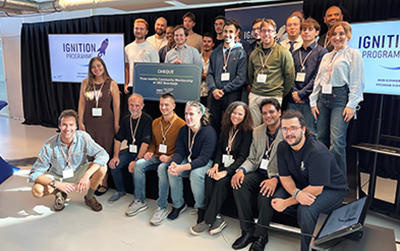
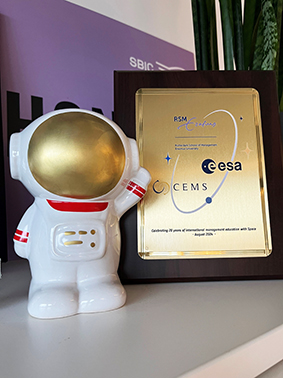
ESA BIC Noorwdijk incubatees took part in the 2026 ESA–CEMS block seminar setting challenges for students from the MSc International Management/CEMS programme who visited SBIC recently. This is a long-standing collaboration between ESA (European Space Agency) and CEMS (Community of European Management Schools) and the Rotterdam School of Management/Erasmus University (RSM) to foster innovation and collaboration between business and space. The afternoon of 31 Aug was spent at SBIC working on challenges set by the ESA BIC incubatees Earthexplorer, Wren Aerospace and ZemQuest, as well as three companies based at RDM Rotterdam. Here, we share some insights.
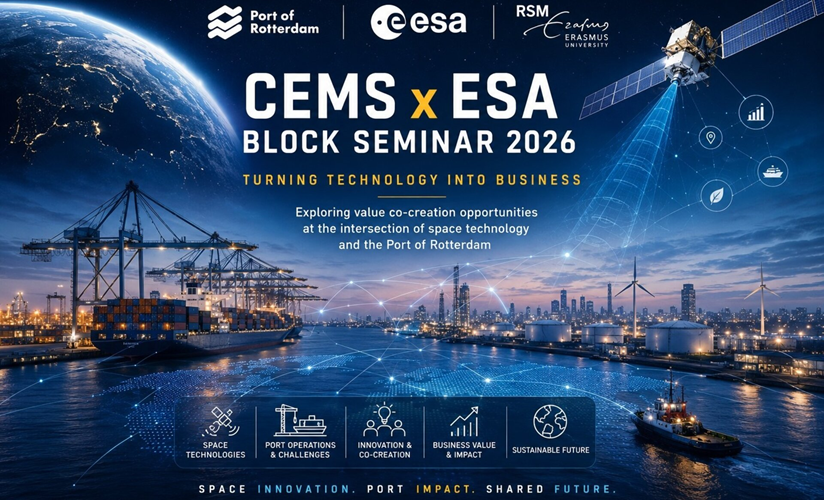
Since its establishment, the ESA–CEMS block seminar has explored terrestrial applications for technologies originally developed for the space sector. In its current edition, it focuses on value co-creation opportunities at the intersection of the space sector and the Port of Rotterdam. The first day of this week-long assignment this year began in Noordwijk, with a visit to ESA ESTEC and introduction by Niels Eldering, the head of ESA Entrepreneurship & Business Incubation Office. The students were then split into groups and the ones working on innovation challenges were welcomed at SBIC to effectively work as consultants for six startups.
Turning technology into business
During the ESA–CEMS block seminar, business talents connect with entrepreneurs to refine their consultancy skills and get unequivocal access to one of the most dynamic and high-tech industries. When business students are given the chance to work on space inventions for a week, they can create great proposals on how to spin new products off to create new businesses. or provide creative solutions to real-world challenges.
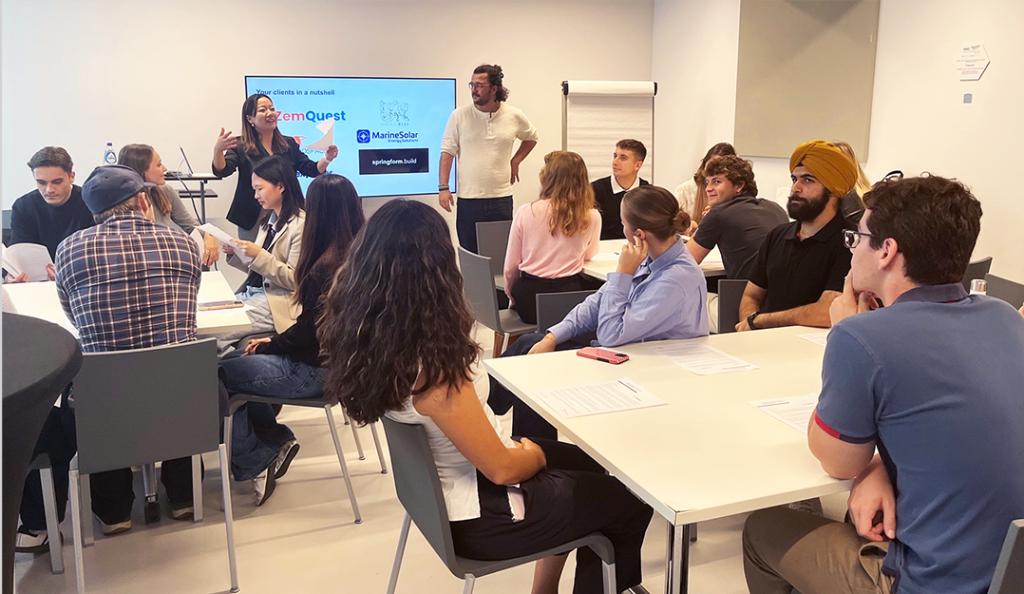
The afternoon at SBIC began with a welcome from the ESA BIC programme manager Jacobo Domingo, before the RSM associate professor Yu Liu welcomed entrepreneurs from the six startups to pitch to the students-turned-consultants from the “New Venture Consulting” stream.
The ESA BIC incubatees who presented were Earthexplorer, Wren Aerospace and ZemQuest. And the RDM Rotterdam startups included Springform, MarineSolar and Urban Reef.
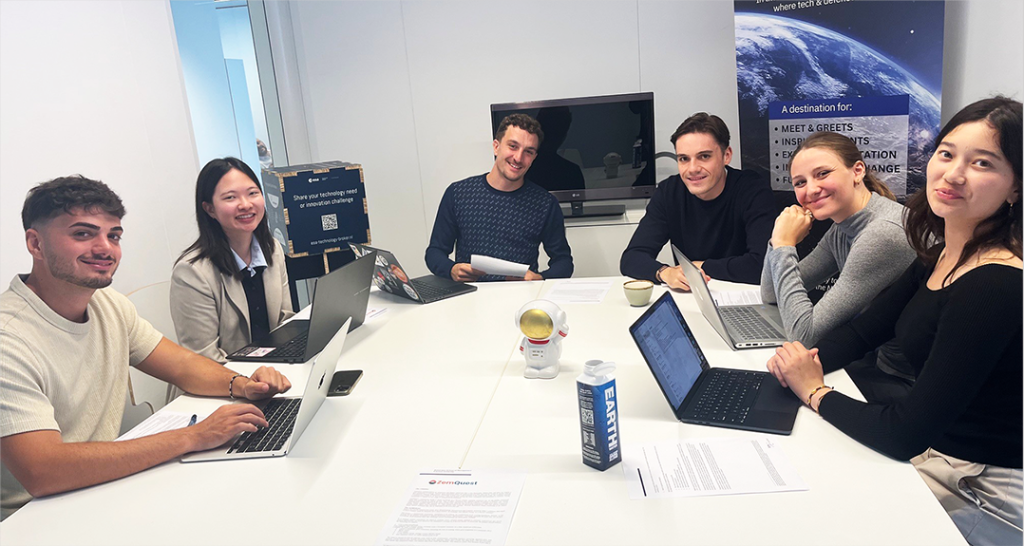
The students then worked in their individual groups and took the opportunity to deliberate with the startups. Over the next few days, the teams were coached by an RSM faculty member and guided through a structured innovation methodology – from design thinking to business model definition – adapted flexibly to the needs of each team. After delving deeper into their challenges, the students prepared to supply their consultation reports by the end of the week.
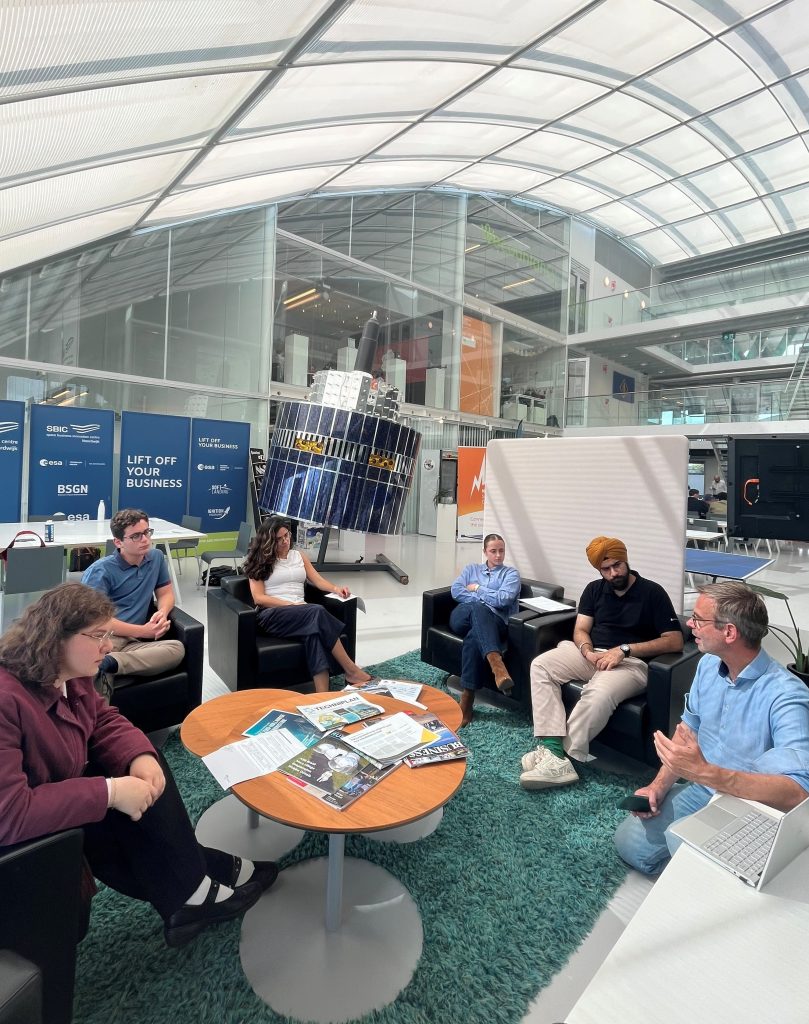
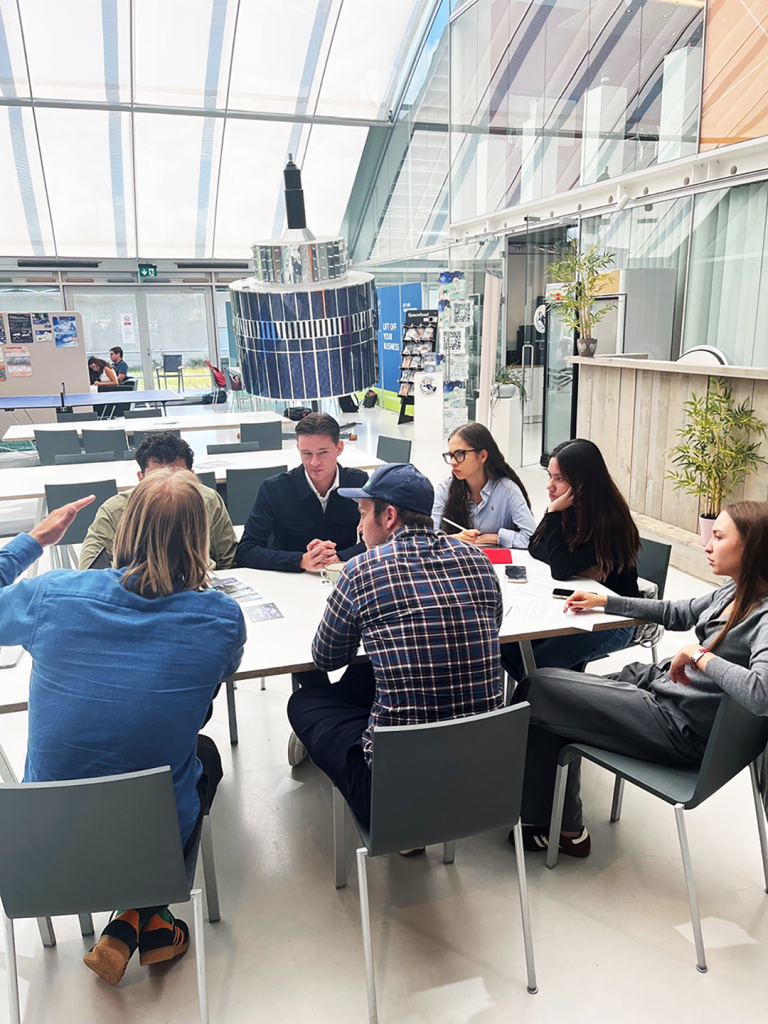
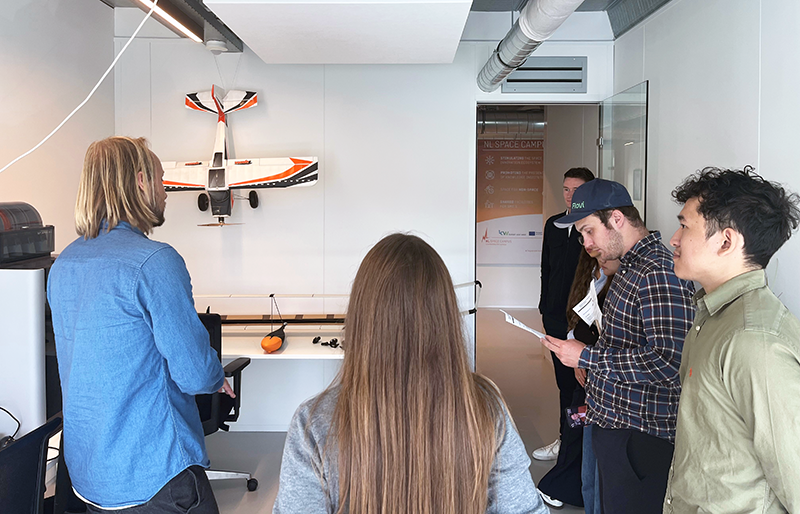
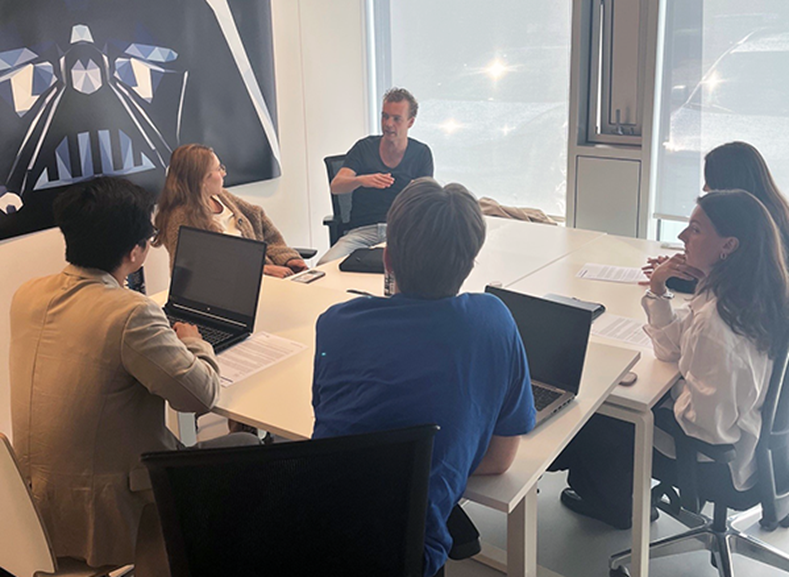
Max Latour (Urban Reef) with the students
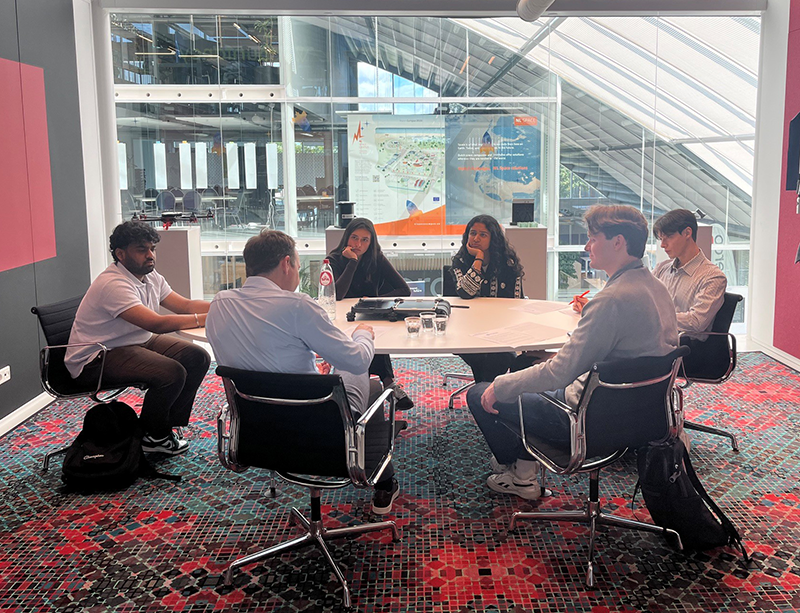
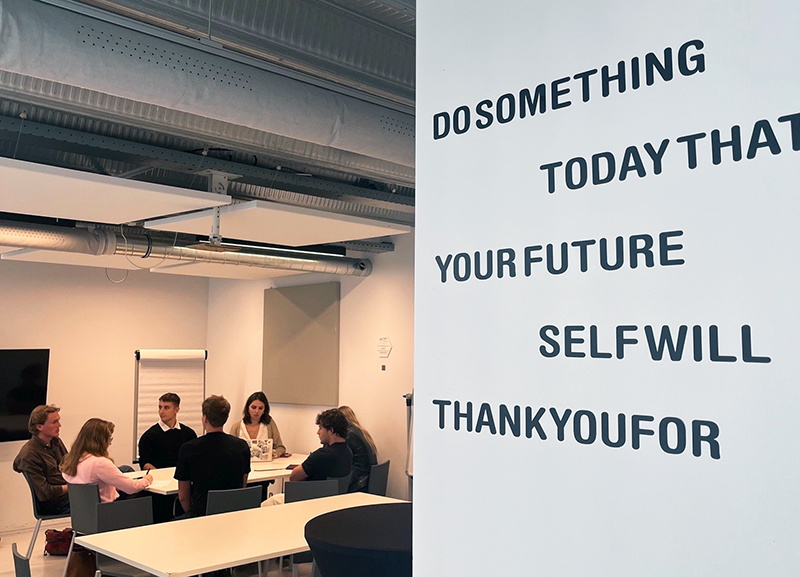
Space business challenges
The three consultancy projects from the space business startups were varied. Earthexplorer leverages satellite data to empower organisations to establish sovereign open-core data platforms for agriculture and water monitoring, while both Wren Aerospace and ZemQuest have transferred space tech to Earth for their stratospheric unmanned aircraft (high-altitude platform station) and sustainable mobile power (aluminium–air batteries), respectively.
The strategic challenges set included:
- Commercialisation and market entry for Earthexplorer’s open-core model
- Bridging the revenue gap until Wren Aerospace’s platform is ready
- Market study to identify new off-grid applications for ZemQuest’s batteries
The ESA BIC entrepreneurs were impressed by the students’ business reports and were positive about the whole experience:
- Corné van der Sande, CEO of Earthexplorer, shared his main takeaway on the findings of the student team, which highlighted “the policy landscape shows a consistent pattern – that governments actively support sovereign open-source development, yet none legally obligate public bodies to choose it over closed-source alternatives.”
- The student team responding Wren Aerospace‘s challenge suggested a near-term market to pursue first – the European deployable emergency connectivity market – supplying temporary aerial coverage to civil protection agencies where terrestrial networks have failed after floods, wildfires, etc.
- Finally, the students working on Zemquest’s challenge, after assessing where current off-grid demand would benefit from sustainable batteries, identified a clear opportunity – festivals and events – with market entry going through event-power contractors rather than direct to organisers, and the positioning resting on operational advantages rather than price.
The decision, for the first time this year, to include a student with a technical background to each group of business administration students also received a positive response. “A good move,” concluded ESA’s Niels Eldering. “By adding the technical perspective, the students came up with even better solutions. That is how it works in practice as well; both disciplines need each other.”
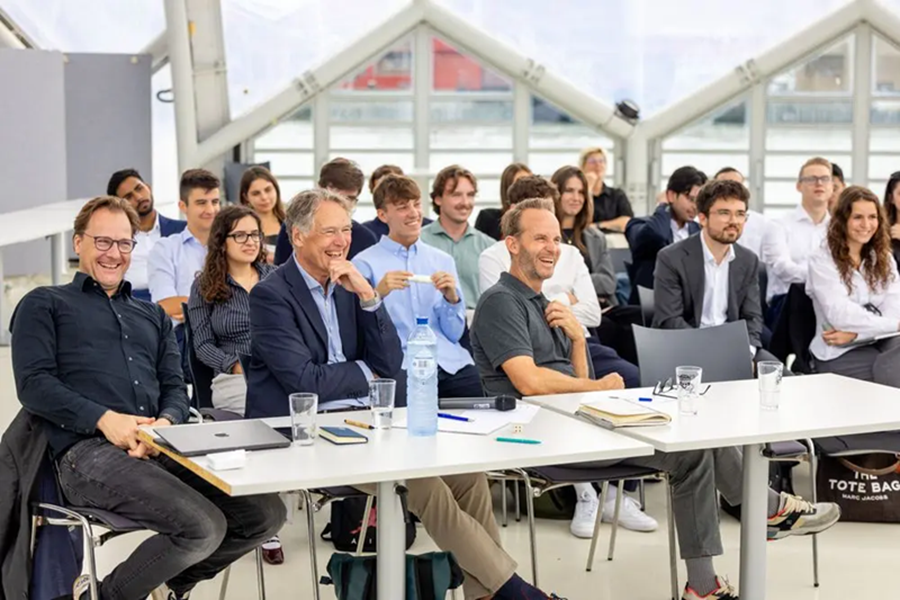
Final presentations at the port in Rotterdam
The culmination of the busy week was the teams’ presentations at RDM Rotterdam to an audience of students, representatives of the startups and a jury from ESA, RSM and Port of Rotterdam. It was a celebratory atmosphere and after the business of the student pitches, there was an opportunity to network and to raise a glass.
Of the students taking part in this year’s event, Prof. Yiu commented: “They came out from behind their theory books for the first time, into the real world. They were given concrete challenges by companies and had to figure it out for themselves. For them, this was a great first practical test. The companies were happy with the solutions and recommendations. As far as I’m concerned, the students passed this test with flying colours.”
ZemQuest’s Michiel Kruijff (CEO) and Gian Mario Rossi (CTO) were excited to be in Rotterdam for the final presentations. They enthused: “We returned to RDM campus to witness our team of talented students of the RSM New Venture Consultancy track, present their market study findings for aluminium batteries for festivals and other off-grid applications and take a fantastic 2nd place. Very well done!”
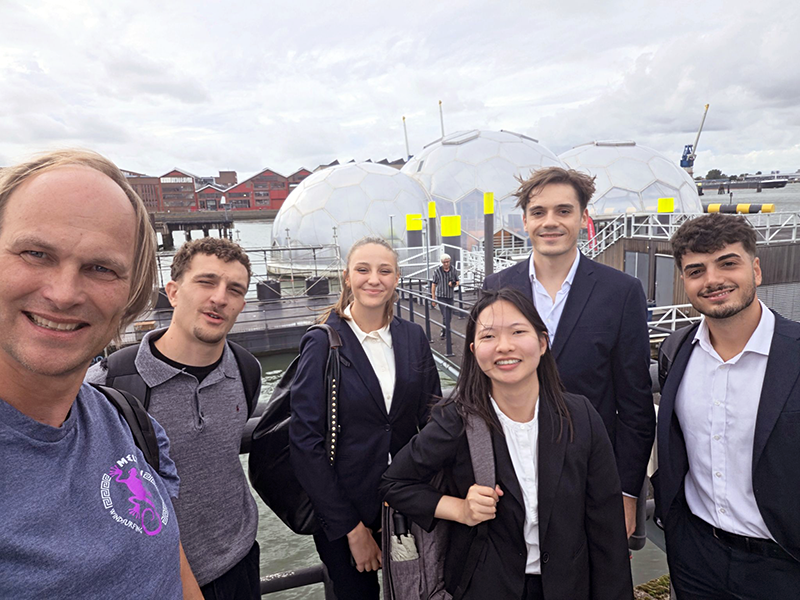
We look forward to welcoming the CEMS students back again at SBIC next year
when there will be new ESA BIC challenges for the new cohort!
ABOUT ESA BIC NOORDWIJK: In this programme, space startups get up to €60,000 zero-equity funding for the development of their idea, receive technical support by ESA or partners, and get extensive business support by SBIC. Full details at: esa-bic.nl.