An upcoming event on 29 Oct at SBIC will put artificial intelligence (AI) in the spotlight. The afternoon session on AI for Safety & Resilience is co-organised by KickstartAI, NL Space Campus and SBIC Noordwijk. The event will cover AI-driven safety in the space domain and explore how AI and space tech together can strengthen safety and resilience, with a focus on topics including foundation models, AI in space hardware, Earth observation and satellite-based applications. Join us from 15:00 and stay for the NL Space Campus Network & Drinks after, which continues the space x AI theme. Register now

KickstartAI, established as an independent non-profit company in 2022, drives initiatives that strengthen the Dutch AI ecosystem and accelerates the application of AI in the Netherlands where it adds most value. It also brings together technical practitioners and strategic leaders at events such as its flagship conference TechDays, taking place in Amsterdam on 15 Oct 2026. Safety and AI is high on the agenda for the organisation with a KickstartAI blog post stating that “the current state of AI in autonomous systems reflects a balance between technical realities and societal concerns about safety and reliability.”
Journalist Ioanna Lykiardopoulou discussed the role of AI in safety and security in a more recent KickstartAI blog post, commenting: “AI plays a critical role in strengthening our safety across diverse domains, from cyber defence to combating financial crime and protecting national security. Yet, this same capability also exposes us to serious risks: AI can serve as both a powerful shield and a vicious sword, depending on who wields it.”
That article explored how AI is being used to reinforce cybersecurity, financial fraud detection, threat prediction and military defence operations. The upcoming event later this month in Noordwijk, that sees KickstartAI collaborating with NL Space Campus and SBIC, takes a look at AI in relation to space tech.
Space tech and AI
The European Space Agency (ESA) is investing in and enabling AI adoption in numerous areas. In May 2025, a white paper was published demonstrating how AI is shaping the future of telecommunications and highlighting the synergies between AI and satellite technologies. Fast forward a few months to Mar 2026 and news was shared about the establishment of a new AI Hub to advance satellite-enabled connectivity.
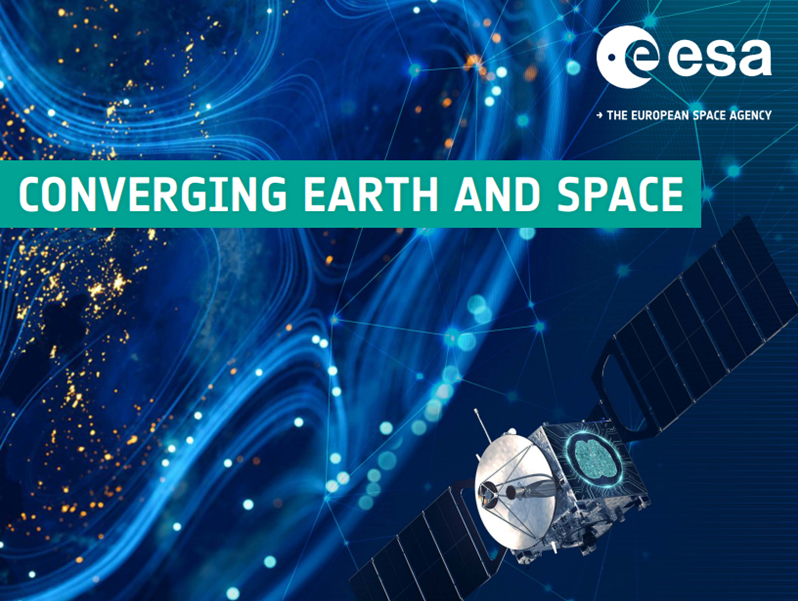
More recently in Sep 2026, ESA announced a new collaboration with Mistral on the establishment of a strategic framework in response responds to the growing demand for trusted and sovereign AI capabilities across the space sector.
“Artificial intelligence is rapidly becoming a key capability for the future of space, and ESA is already demonstrating its value through operational and research projects,” commented ESA director general Josef Aschbacher. “Through this strategic cooperation with Mistral, a leading European AI company, we are taking another important step towards reinforcing Europe’s technological leadership and resilience. Together, we aim to develop innovative, secure and trusted AI solutions that benefit the space sector and European society.” This comes ahead of the 3-day conference on AI next week at ESA ESTEC leading researchers, engineers and industry experts at the intersection of artificial intelligence and space exploration.
It is now timely to put AI, space tech, safety and resilience in the spotlight at the heart of the Dutch space ecosystem in Noordwijk, close to the ESA’s European Space Research and Technology Centre.
“We are developing innovative, secure and trusted AI solutions that benefit the space sector and European society”
Josef Aschbacher, ESA director general
The below text is an edited re-post of the details on the KickstartAI booking form
Event: AI for Safety & Resilience on 29 Oct
Satellites and aerial sensors watch over our planet around the clock, tracking floods, wildfires, heat and changes in the places we live. Turning that data into answers people can act on is still hard. AI is changing that, from models that detect risks in Earth observation imagery to AI agents that answer geospatial questions.
This event on 29 Oct will bring two complementary perspectives on AI and Earth observation in the spotlight. It is aimed at professionals working with data, AI or geospatial technology. You’ll find the sessions especially relevant if you are a:
- ML engineer or data scientist interested in applying AI models, including agentic AI, to satellite and Earth observation data
- GIS specialist or remote sensing expert curious about how AI agents can automate finding, combining and analysing geospatial data layers
- Product lead or founder building AI products that need to be reliable, measurable and ready for real-world use
- Professional working on resilience, risk or policy, looking at how space data can support disaster monitoring, risk detection and climate adaptation.
The session will focus on how these technologies come together to support emergency response, risk modelling and long-term societal resilience.
Navigate the intersectinon of AI and space tech for safety & resilience >>
What to expect
The first perspective will cover a broad look at which AI approaches work for resilience challenges. The second, will provide insights into an AI agent that turns plain-language questions into analyses on remote sensing data. The presentations will touch upon:
- Foundation models
- AI in space hardware
- Earth observation; and
- Satellite-based applications.
Whether you’re building satellites, writing models, working in policy or just curious how space tech helps us prepare for an uncertain future, this event is for you.
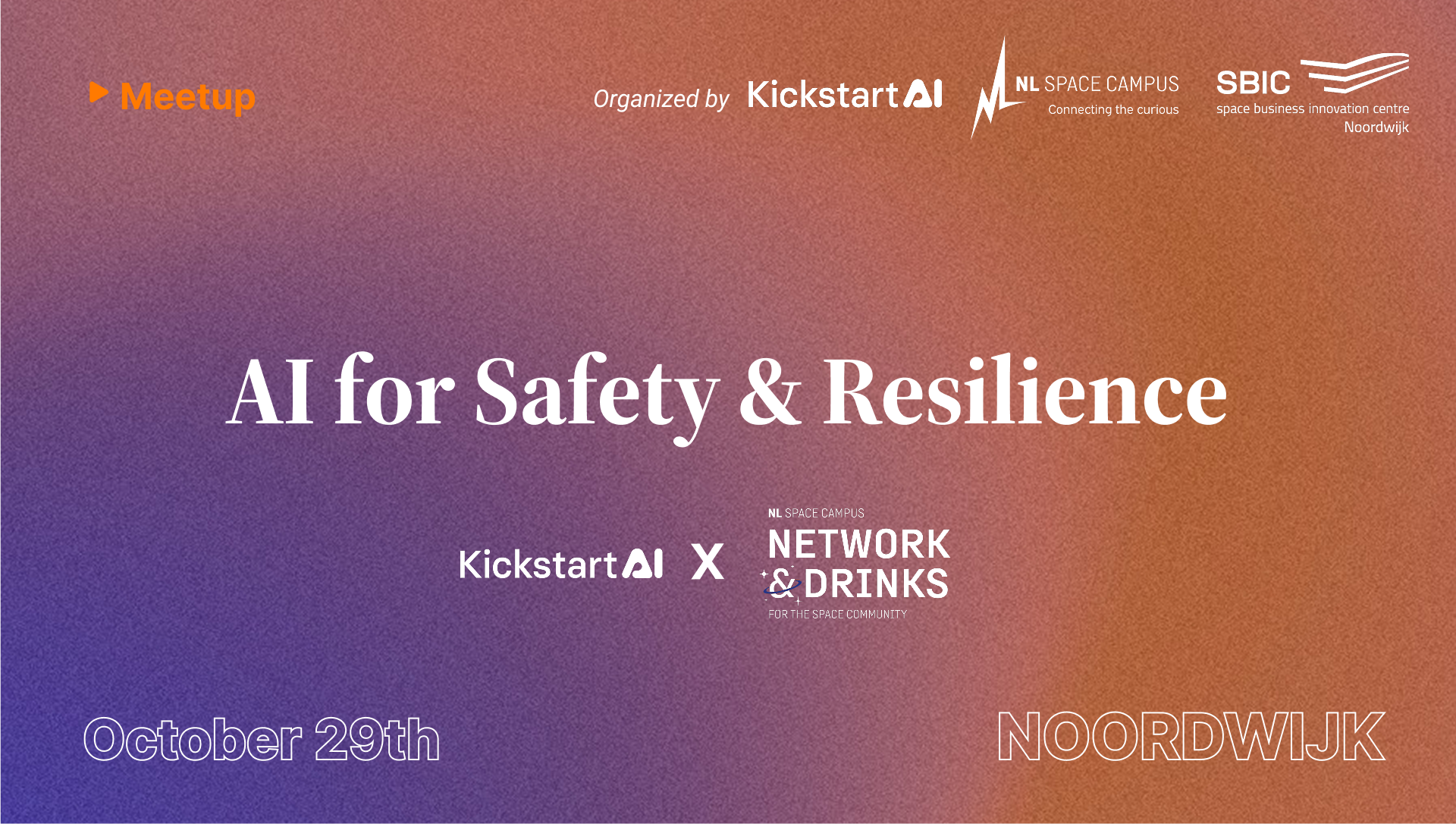
AI for Safety & Resilience is co-organised by KickstartAI, NL Space Campus and SBIC Noordwijk. Conversations can continue during the AI x space edition of Network & Drinks. Separate registration is required.
SPEAKER PROFILES

Yağmur Mavruk is an AI engineer and co-founder of Maiden Space. She will present about AI models for Earth observation workflows and agentic AI in satellite-based solutions. This area has been the focus of Maiden Space for the last year.

Vito Vekic is an AI developer at Terramira. He will present how Terramira built an AI agent that turns plain-language questions into analyses on remote sensing data, helping to detect, observe and monitor risks in the physical environment.
GOOD TO KNOW:
The event is open to all. Afterwards, you are invited to meet members of the KickstartAI, NL Space Campus and SBIC Noordwijk networks during the monthly NL Space Campus Network & Drinks. Registration is required
View other upcoming events happening at SBIC Noordwijk >>
Discover ESA BIC incubatee using AI in its agricultural platform >>