Some text from this news item is extracted from an earlier post on the NLSA website
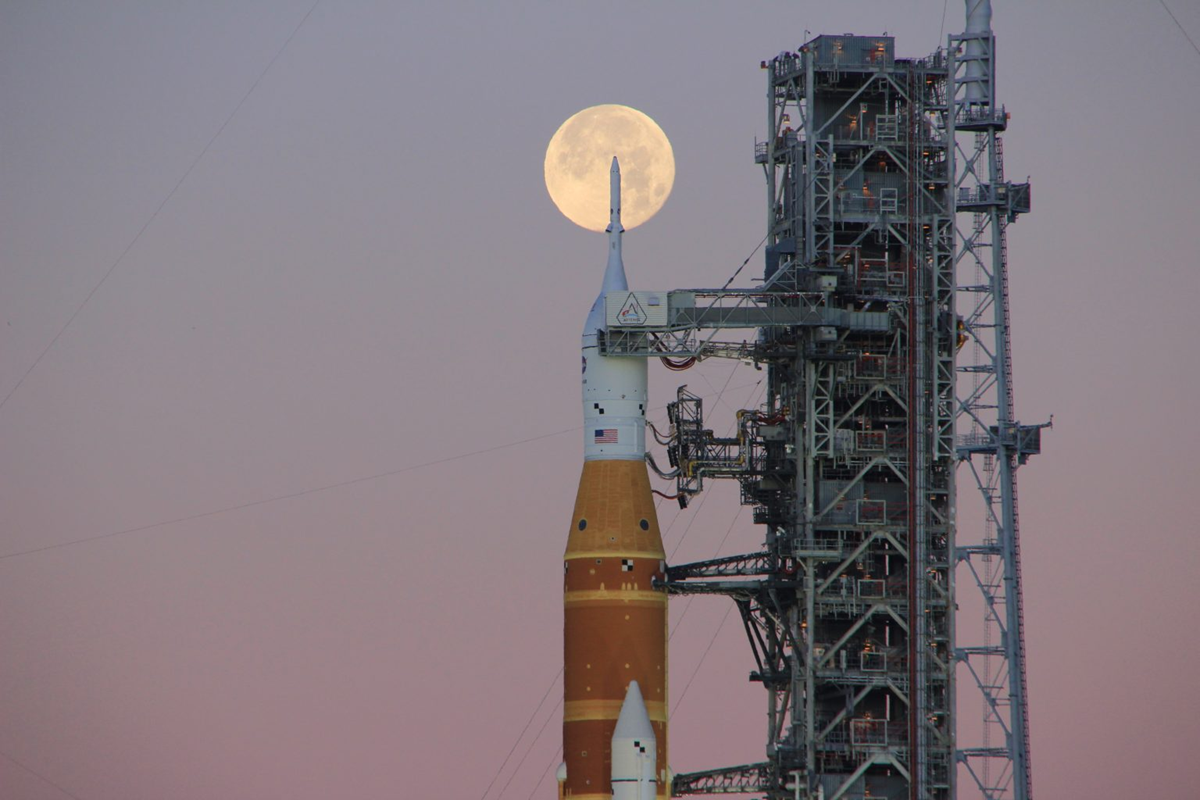
For the first time since 1972, humans have returned to lunar orbit. NASA’s Artemis II mission, with a crew of four astronauts, launched from the Kennedy Space Center in Florida on 1 April 2026 (local time). The Netherlands has made a crucial contribution – the solar panels powering the Orion spacecraft were built by Airbus in Leiden. On behalf of the European Space Agency (ESA), Airbus is the prime contractor responsible for building the European Service Module (ESM). It provides the Orion spacecraft with propulsion, power, fuel and the life support systems the astronauts need to survive on their journey to the Moon. View mission photos via ESA website
Dutch-built solar panels with impressive wingspan
“A proud moment for the Netherlands.” This is how Daniël van Beekhuizen of the Netherlands Space Agency (NLSA) describes the launch of Artemis II. Representing the Netherlands on the ESA Programme Council that deals with manned spaceflight, he comments: “With the solar panels, the Netherlands is making a very tangible and visible contribution to this mission. The fact that Leiden-based Airbus was chosen within the collaboration between NASA and ESA underscores the confidence in the quality of our high-tech technology.”
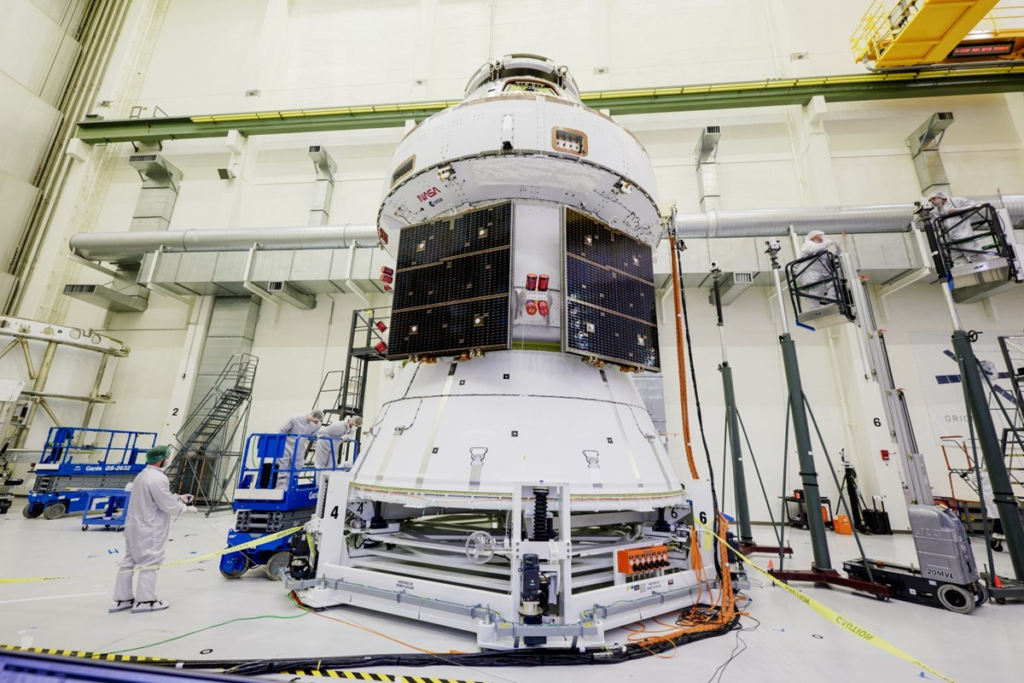
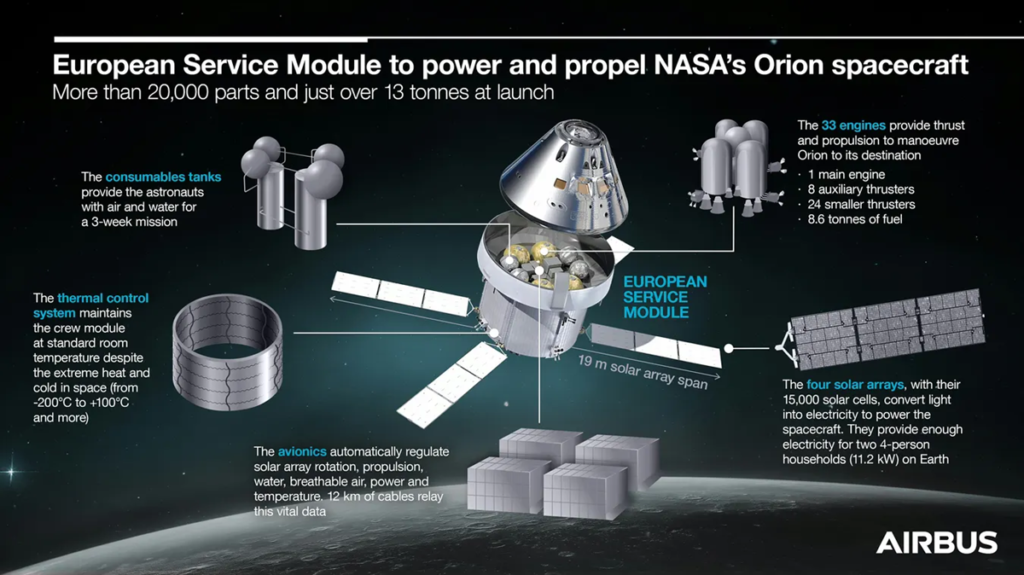
The ESM’s four solar-powered “wings” are large, containing 15,000 solar cells capable of generating 11.1 kilowatts of energy. After the solar panels deployed in low Earth orbit, they give the Orion spacecraft its impressive wingspan of 19 metres. Each of the four solar arrays turns on two axes in order to be able to align with the sun for maximum power generation.
Long-term strategy in the Netherlands
Airbus Netherlands is supplying the solar panels for all six Artemis missions announced to date. Development started as early as 2012. It was 10 years later, in November 2022, that the first units went into space with the unmanned test flight Artemis I. The wings of Artemis II were built starting in 2017 and delivered to NASA in 2021.
The fact that Airbus Netherlands can participate in such a high-profile programme as Artemis is because the Netherlands has been investing in specific knowledge, experience and technology for more than 50 years, says Rob van Hassel, solar panel specialist at Airbus Netherlands. This began in the 1970s with solar panels for the first Dutch satellites, ANS and IRAS. Since then, Airbus Netherlands (formerly known as Fokker and subsequently Dutch Space) has supplied solar panels for some 160 different space missions. “An enormous track record, which we owe in part to our close collaboration with ESA and the Netherlands Space Agency,” said Van Hassel.
“A proud moment for the Netherlands. With the solar panels, the Netherlands is making a very tangible and visible contribution to this moon mission”
Daniël van Beekhuizen, NLSA SENIOR ADVISOR
Custom-made for the Artemis missions
The solar panels of the European Service Module are uniquely custom-made for the characteristics of the Artemis missions. The fact that these are manned flights is a first complicating factor, explains Van Hassel. Because of this, the panels must meet the strictest possible safety requirements. “This is the reason there are four wings with solar panels, instead of the usual two. Even if one wing were to fail completely, the other three would still provide enough energy to complete the mission to the Moon.”
A second complication is the extreme vibrations and noise of the 98-metre-high SLS rocket during launch. The solid-fuel rockets and four large main engines together make more noise than has ever been fired at solar panels from any supplier. “Normally, solar panels are very thin to save weight. Those of Artemis, however, are extra thick so that they do not buckle under this heavy load during launch.”
Solar panels pass the test in space
The flight path of the Artemis missions also presents additional challenges. The solar panels must perform a number of manoeuvres. First, at the moment Orion receives a boost to fly into a higher orbit around the Earth. Then, during the translunar injection, the final push from the main engine that sets the spacecraft on course for the Moon.
Van Hassel continues: “The solar panels will endure significant shocks. Moreover, during that final push, we want to prevent jet dust from the rocket engines from damaging the panels. That is why they are being flipped forward. But things get tense at lower loads. To ensure that the Orion spacecraft can also be controlled manually, the crew pilot will practice with his joysticks for an hour. It is already established that the vibrations from the solar panels will influence that control. But how and to what extent will be tested for the first time in weightlessness. So, it will be exciting to see if the panels react exactly as in our simulations, because such manoeuvres have never been performed in space before.”
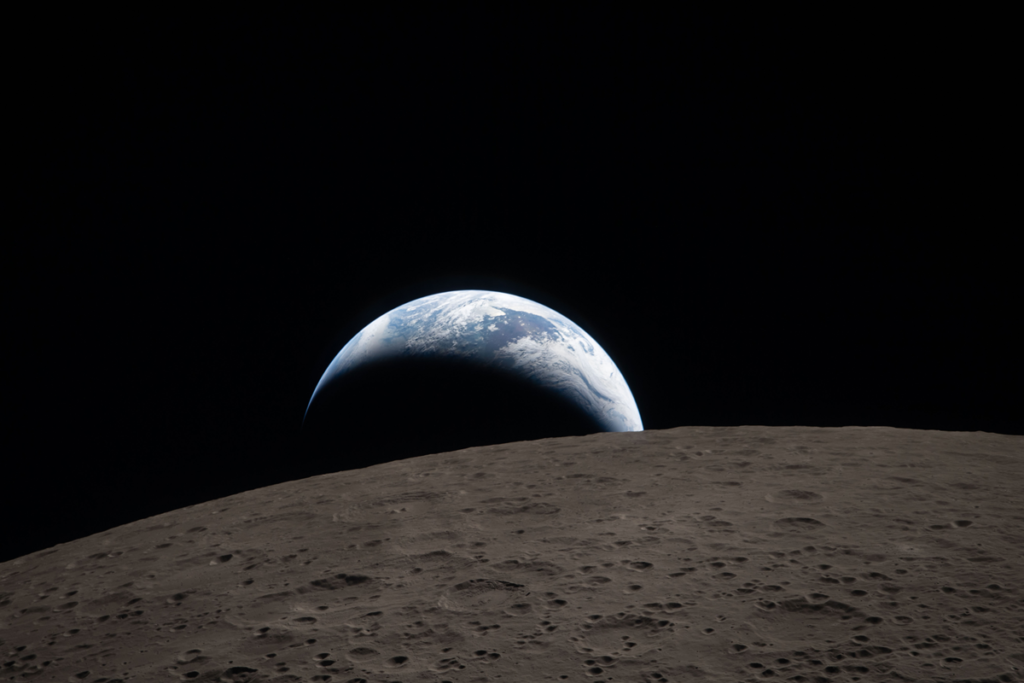
The astronauts are now on their return journey and the spacecraft will splash down near San Diego on 10 April (local time). The Airbus article, outlining the integral part of the ESM in NASA’s Artemis mission, concludes: “This voyage will confirm the reliability of Orion’s critical systems and the impact of deep-space flight on the physical and psychological health of the astronauts. The success of this mission rests on European industrial excellence: through the ESM, ESA, Airbus and its partners are demonstrating that Europe is a key partner in global lunar ambitions.”
Key moments of the mission can be viewed via the NASA website
Airbus and NLSA are partners of SBIC; view full news item on the NLSA website
ESA’s Dutch business incubation programme is welcoming new space business ideas: