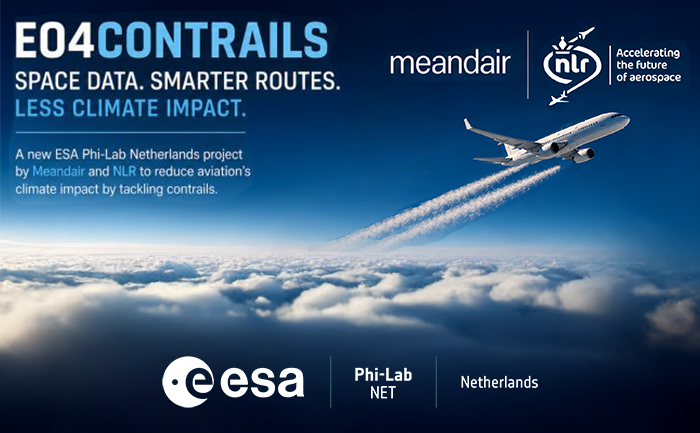
The criss-crossed patterns that streak across the clear blue sky might look eye-catching but these condensation trails – or contrails – are contributing to climate impact. Meandair and the Royal Netherlands Aerospace Centre (NLR) are working on a novel solution to tackle contrails using Earth observation (EO) and remote sensing technologies during participation in the ESA Phi-Lab Netherlands programme. The teams are combining space data and near-real-time weather information to offer the aviation industry smarter flight routes that will avoid contrails forming in the first place. We caught up with Meandair’s co-founder Peter Novak to find out about the EO4Contrails project.
The next ESA Phi-Lab NL selection deadline will be in fall 2026!
The ESA Phi-Lab Netherlands is part of the European Space Agency’s Phi-Lab network that focuses on maturing technology in response to needs coming from the commercial world. Each Phi-Lab has themed focus areas and creates a sustainable ecosystem for innovation, providing comprehensive support to selected economic operators, including intellectual contributions and a range of services under one roof.
The Dutch Phi-Lab operates an open call for projects and the programme is run by NL Space Campus and SBIC Noordwijk, supported by Netherlands Space Agency and ESA Commercialisation Gateway, along with a dynamic community of partners from the Dutch space ecosystem.
“It really is a great opportunity to get connected to the whole network belonging to the ESA Phi-Lab Netherlands community”
PETER Novak, meandair
Reducing aviation’s climate impact
This is not the first time Meandair has participated in an ESA commercialisation programme. The company graduated from ESA BIC Noordwijk in 2021 where it focused on developing technology for near-real-time weather forecasting, otherwise known as nowcasting (read the ESA BIC graduation interview). Its nowcasting technology is now a key part of the EO4Contrails project, which is ultimately focusing on predicting – and suggeting routes for planes to avoid – the weather conditions that can cause the contrails to form, thereby reducing climate impact. The trails of water in the form of ice crystals combined with tiny solid particles from burned jet fuel cause a net warming effect that is comparable to that of carbon dioxide emissions of aviation.
“The core focus is to reduce the harmful creation of contrails by operators in the aviation industry. These contrails are only formed when the atmosphere’s humidity and temperature meet certain conditions,” comments Peter Novak, co-founder of Meandair and principal investigator of the project. “We will provide the most up-to-date and accurate weather forecasts about the atmosphere available, so that these aviation operators can easily navigate around these control sensitive areas of the atmosphere.”
EO4Contrails by Meandair and NLR
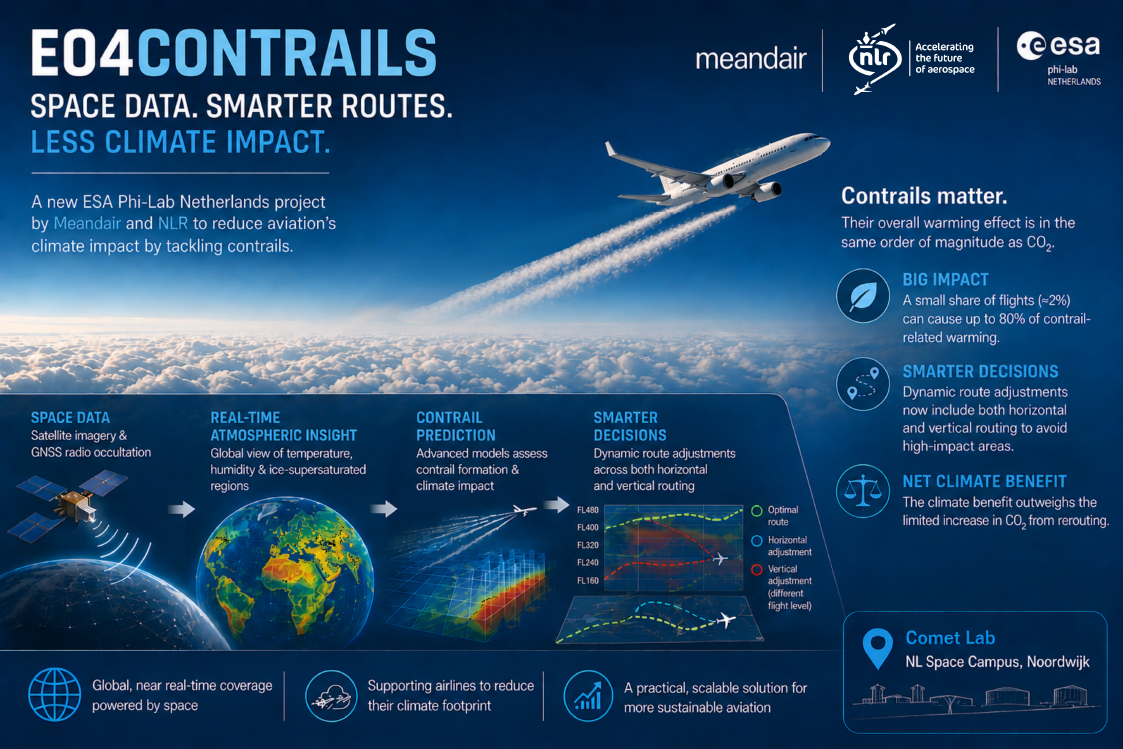
The project is powered by space data, including satellite imagery and global navigation satellite systems (GNSS) radio occulation and aims to deliver a global, near real-time view of atmospheric conditions at cruising altitude – something not achievable with traditional approaches alone. It builds on Meandair’s Nowcasting Weather Engine and reflects a broader shift in aviation: tackling non-carbon dioxide climate effects with actionable, operational solutions.
Alongside Peter, the Meandair team includes Antonin Komenda (Meandair co-founder and technical lead), André Bos (project manager) and Filip Svabik (meteorologist), who knows how to model the atmosphere in such a way that accurate predictions of contrail-prone areas in real-time.
Research to real-world impact
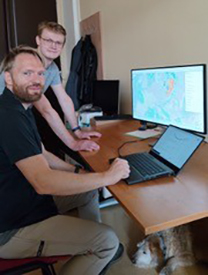
Contrail mitigation can require dynamic strategies to reroute mid-flight based on prediction of where high-altitude contrail clouds are likely to form and persist. The validation of the nowcasted contrails and impact is carried out by the NLR team of David Engler Faleiros, Liesbeth Wijn and Lukas Söffing.
The teams are developing the EO4Contrails project to go from research to real-world impact in the coming months. Under development is a next-generation, real-time weather intelligence system that:
- Identifies ice-supersaturated regions where persistent contrails form
- Combines satellite data with advanced atmospheric models
- Enables smarter, dynamic flight routing decisions
CONTRAILS BACKGROUND: While most people associate aviation emissions with carbon dioxide, contrails can also significantly contribute to global warming. Contrails are the thin, white clouds often seen behind aircraft. Under certain atmospheric conditions, these contrails can persist and form cirrus clouds that trap heat in the atmosphere. Reducing their formation could therefore play an important role in making air travel more sustainable. Solutions like the EO4Contrails project could help airlines better understand and manage their environmental footprint. Discover more
Embedded in the space business community
On how he feels about joining the Phi-Lab programme, Peter says: “For us, it really is a great opportunity to get connected to the whole network belonging to the ESA Phi-Lab Netherlands community. This really makes it for us much easier to reach out to, for instance, a similar research institution abroad or to organise a workshop with our stakeholders.”
Since kicking-off the ESA Phi-Lab NL contract in March 2026, Peter has been back in the space business community at SBIC Noordwijk. Members of both the Meandair and the NLR teams have attended numerous events on campus, including taking the opportunity for cross-fertilisation among the entrepreneurs from two Dutch ESA commercialisation programmes, ESA BIC and ESA Phi-Lab on a tour of ESTEC (pictured below).
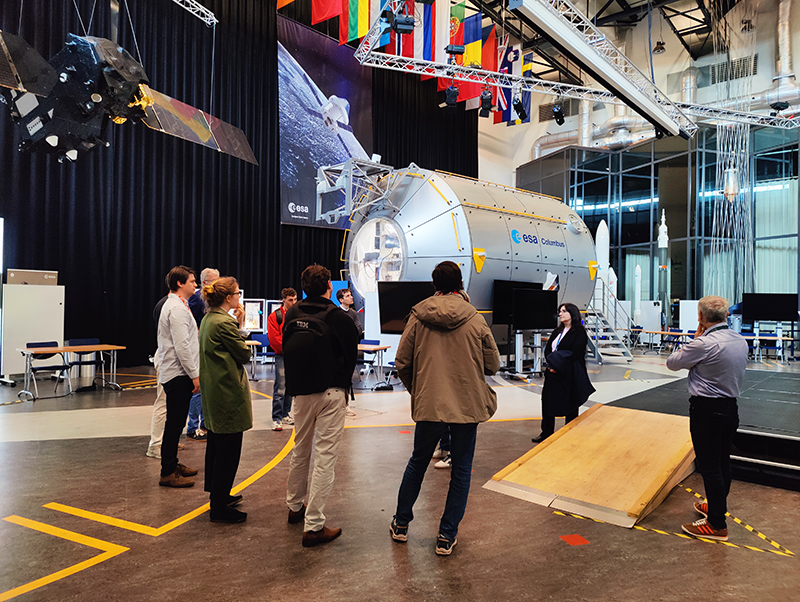
Contracted ESA Phi-Lab NL participants can join as an SBIC community member and play a key role in the space business community.
APPLY TO ESA PHI-LAB NETHERLANDS
ESA Phi-Lab Netherlands has a permanent open call for research project ideas in the areas of: Earth observation; positioning, navigation and timing; and secure (laser) satellite communication. The programme accelerates space-powered innovation for a safe and resilient society. Selected research projects will benefit from an innovation seed funding of €200K and receive extensive guidance, support and coaching from academic and commercial experts in their respective fields. Additionally, teams will have access to facilities, workspaces and a network of experts and partners. The collaboration between research institutions and the market segment can yield radical innovations and new, sustainable businesses. esaphilab.nl
Where research breeds innovation for emerging space market!
Discover everything you need to know about the ESA Phi-Lab NL programme.