The European Space Agency’s Business Incubation Centres (ESA BICs) are catalysts for innovation and fostering space related entrepreneurship. These centres provide essential support, resources and guidance to startups with groundbreaking ideas. Here, we highlight the inspiring journey of Sofia van ‘t Woud.* With the help of ESA BIC Noordwijk, Sofia transformed her academic project into a thriving business. The incubation programme enabled Sofia to develop her company BlackShore and launch an innovative Earth mapping game that leverages satellite imagery for various applications.
Originally published on the ESA Commercialisation Gateway website.
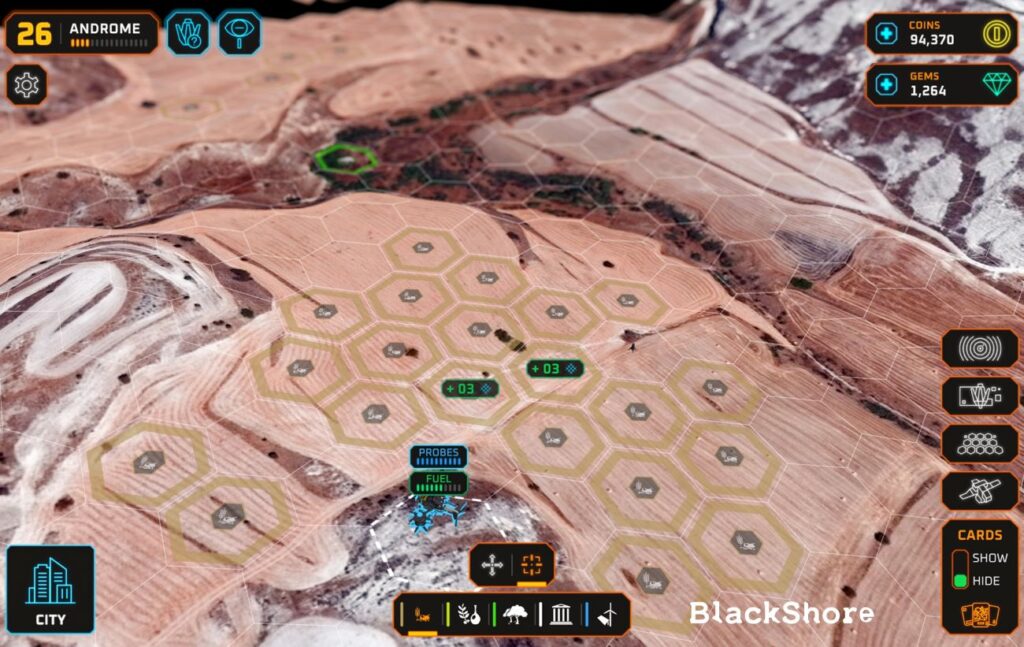
The beginning of BlackShore
This story exemplifies how ESA BICs are instrumental in turning visionary concepts into impactful solutions, driving progress in the space industry and beyond. When Sofia van ‘t Woud was creating a computer game with satellite images of Mars for her master’s thesis, she knew she had found her passion. Freshly graduated, armed with her thesis paper and a first version of her game, Sofia showed up at ESA BIC Noordwijk. “I knew nothing about companies, I knew nothing about entrepreneurship, and I knew nothing about ESA. All I wanted to do was to continue with Mars,” Sofia recalls.
Levelling up in satellite imagery
Sofia quickly learned that the real need for satellite imagery was much closer by, right here on Earth. After getting selected for ESA BIC in 2011, the incubator supported Sofia as she developed her company BlackShore. Throughout the programme, her initial approach transformed into an Earth mapping game – Cerberus – that was also supplemented with e-learning and players receiving points for correct identifications. With the vast amounts of satellite imagery available, applications here include food security, to understand climate change or efficient farming.
The game acts as a crowdsourcing platform for “citizen science” – where players explore satellite images and need to identify certain characteristics, such as terrain features, crops or anomalies. Each new satellite image offers a completely different environment for the players to explore. Using the power of the crowd, this allows for large amounts of data to be added that can enhance satellite images.
“The e-learning part is really important – teaching people quite difficult things about the planet”
sofia van ‘t Woud
One of Sofia’s personal highlights was getting to experience the capabilities of her game first-hand. At Mars Desert Research Station in Utah, USA, Sofia joined five other analogue astronauts to simulate a Mars mission in the rugged desert landscape. Using her crowdsourcing platform, Sofia asked the players of her game to map the area around their analogue “space” station, which included similar terrain features to a Martian environment. She is proud of how this proved her technology: “The people were mapping with the game at home, finding anomalies and then, in the station, we could visit those locations in the Utah Desert. This was really cool because they were actively steering us as astronauts, and then we could send images back home to the crowd from these coordinates. It really worked!”
Mapping a changing world
With her technology proven to successfully identify points of interest, the game has also benefitted from the improvements in satellite image quality over the past decade. While in the game’s early days, players were working with 50-centimetre resolution, this has since improved to 30-centimetre resolution. The first time using these higher-resolution images was particularly exciting for Sofia. In a project by the African Development Bank, new pumps, roads and dams were built in Niger. When they asked the crowd to map the changes between 2016 and 2021, these were clearly visible. “You could actually see people going to the markets, you could see some prosperity and that is really nice. The crowd loved to map that,” she adds.
Alongside the changes in image quality, advances in artificial intelligence (AI) also have implications for the game. In a project with ESA, Sofia’s crowdsourcing platform helped train an AI to measure the impacts of climate change on durum wheat production in the Mediterranean. She is proud of the project: “The outcome was a total of 250,000 new data labels released as open data. This is free data for researchers to play with, or you can also now, in theory, use those labels to create your own fake worlds or simulations of climate change.”
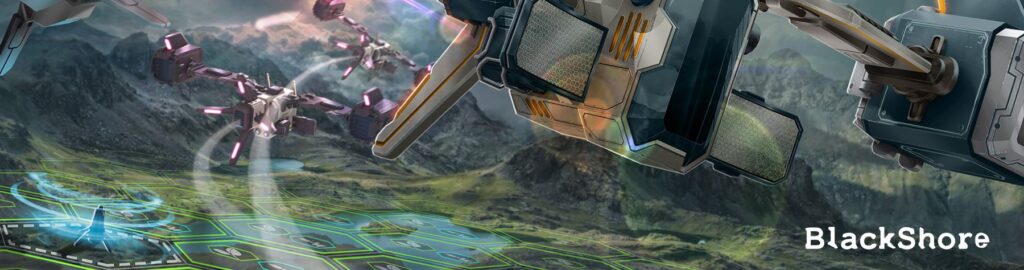
Successful application: In 2021, ESA BIC aumnus BlackShore created a new map in the Earth observation computer game Cerberus. This map covering the Italian region of Puglia was made available to the the player base of more than 70,000 people. The goal was to map the types of crops and measure the impact of COVID on the ability to grow said crops. The project was supported by ESA ESRIN and a similar project of BlackShore was concluded at that time in Ethiopia. blackshore.eu/projects
Learning along the way
Being able to learn new things and develop skills further is something Sofia highly values about her entrepreneurial journey through ESA BIC. From her time during – and after – her incubation period, having an office on location helped expand her view of the space industry. While it has not always been easy, challenges along the way and leaving her comfort zone are what helped her grow: “I don’t think I would have done anything differently. Things were unplannable and that’s actually what I like, I just like this adventure.”
However, she warns about not internalising the difficulties that come with being an entrepreneur: “Maybe you do not want to show to the potential investors you are vulnerable, you are struggling with things, and maybe you don’t want to share it with your friends or your family. I think it is still very important to pay attention to your mental health and get support if you need it.”
Looking into the future, Sofia knows what her dream is – to go back to the game’s roots and develop applications for the game on Mars. “There are also interesting things on Earth, but my real heart is over there,” says Sofia. For now, she is happy that she can further spread knowledge about our planet: “I get to educate people about Earth and that is what I like. The e-learning part is really important. We are actually teaching people quite difficult things about the planet.”
About BlackShore’s product: Cerberus is a geospatial-based crowdsourcing platform in which the “brain power” abundantly present in the gaming industry is put towards good causes. BlackShore delivers accurate, up-to-date and low-cost map products based on the crowd-sourced interpretation of satellite, aerial or drone imagery. The application maps what matters most in the world. Topics range from climate impact monitoring, disaster relief and (food) security. blackshore.eu/projects
* Jan 2026: Sofia van ‘t Woud began her space career once known as Hans van ‘t Woud [website article updated 28 Jan 2026]
This article was written for the occasion of the 20 years anniversary of ESA BIC and published on the ESA Commercialisation Gateway website. For more ESA BIC success stories, go to the LinkedIn group by clicking on the banner:
Recent news:
20 years of ESA BIC: “Startups foresee the big trends in space”
Prepare your space business idea for lift off!
Discover everything you need to know about the ESA BIC Noordwijk programme.